I am naturally and passionately drawn to never-before-imagined, out-of-the-box creativity and brilliance that I can discover, unwrap, dissect, engorge, suck in, and be enveloped by its ability to elevate all of my senses, and inspire and excite me in ways that only great sex can. So it was inevitable that I would find Green Village in Bali, or it would find me.
Trolling the internet one night, searching for architecturally interesting homes and hotels in Bali, I came across the wildest pictures of bamboo homes I had ever seen. They sort of resembled the futuristic homes of the Jetsons, with their oddly balanced multi-levels of living space and crazy-shaped roofs that looked like they might just ascend up into the sky. But these homes were made entirely of bamboo; forested, harvested, cured and treated right here in Bali. Not only were the structures made of bamboo, the furniture and everything in them was also made of bamboo. My eyes scanned for words while my brain begged for information. I desperately needed to read and absorb, to understand what I was looking at.
Not surprisingly, the idea and development of Green Village, and it’s predecessor The Green School, is the brainchild of famous jewelry designer John Hardy and his wife Cynthia. John and Cynthia settled in Bali more than thirty years ago where they built a highly successful international jewelry business with local Balinese artisans. Having sold that business in 2007, they focused their artistic energies on the creation of a school for children that would respect Bali’s land, traditions and culture while providing a student-centered learning environment that combines spirituality with environmental awareness and innovation. The result is a unique and inspiring environment that cultivates the minds of its students in physical, spiritual, and empowering ways and breaks the mold of the traditional classroom.
I toured this amazing, evolving creation of the Hardy’s and one thought consistently smacked me on the head. Brilliant. Physically, the structures are inspiring and challenging. For example, the classrooms don’t have walls, so the teachers and students have devised other ways to hang their art and learning surfaces, such as blackboards or whiteboards. Obviously, most of the structures are completely eco-friendly with as little impact on the earth as possible, and that “greenness” translates into everything at this school, from the self-sustaining fruit and vegetable gardens that provide home-grown lunches, to the “solar gardens”, to the community involvement of parents sharing roles as teachers and the involvement of Balinese culture in this extremely international mix of students. Currently, there are 329 students from over 50 countries. The school believes in integrating the local Balinese into this mix and offers scholarships to Bali students in an effort to satisfy its community requirement that 20% of all students are Balinese.
Spiritually, the curriculum focuses on integrating meditation and spirituality into its program through directed physical and mind exercises. For example, kindergarten students might be guided through a morning meditation by being asked to close their eyes and imagine they are butterflies, softly flying around the classroom, lifting their arms, bending their bodies, and imagining the colors of their wings. They aren’t actually told they are meditating or doing yoga forms…but they are introduced to these concepts through this type of imagery and physical movement. Just by being so connected with and literally immersed in nature I felt an undeniable spiritual energy on this outdoor campus. Walking the paths between the open-air buildings, following the river and hearing it gurgle as it flowed along, spending time observing the starlings’ behaviors in the bird sanctuary all had a profound, heightened effect on me. It made me want to be a kid again and attend this school, for sure.
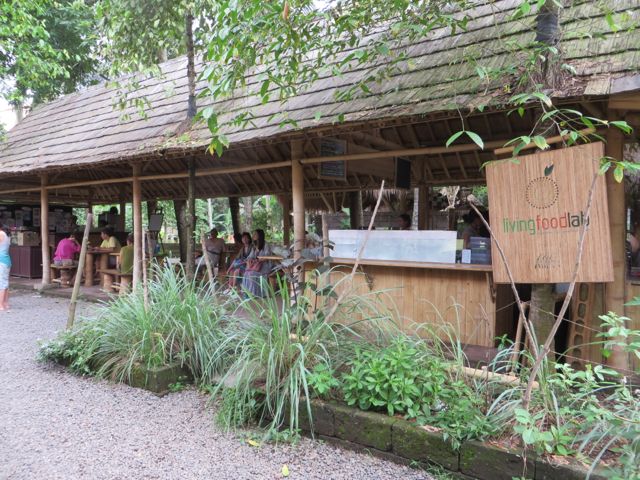
Green School, entrance where parents and kids congregate, and eat!
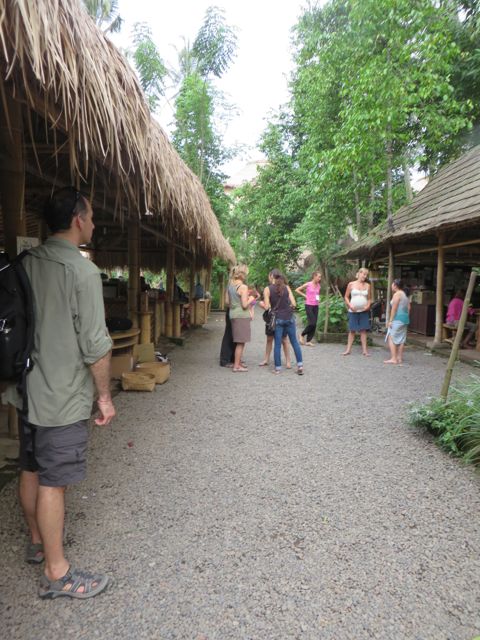
Pick up time at Green School!
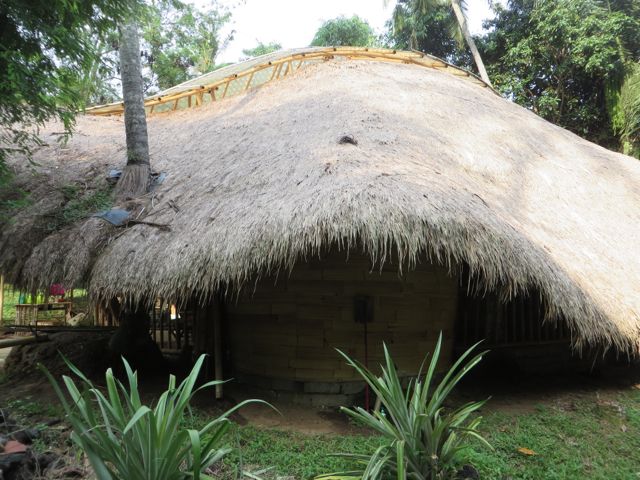
A classroom from the outside.

A classroom on the inside!
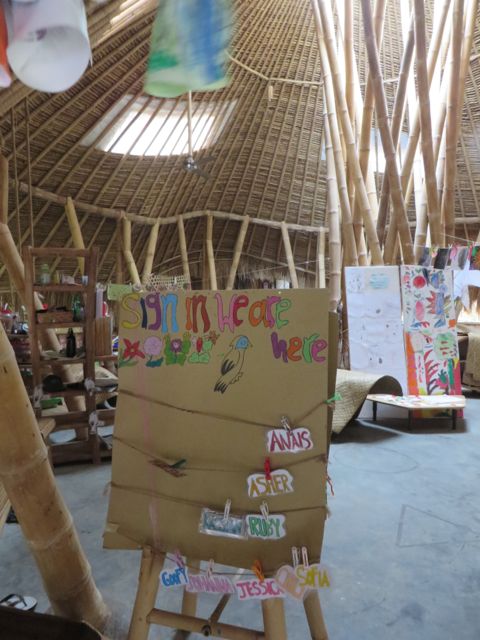
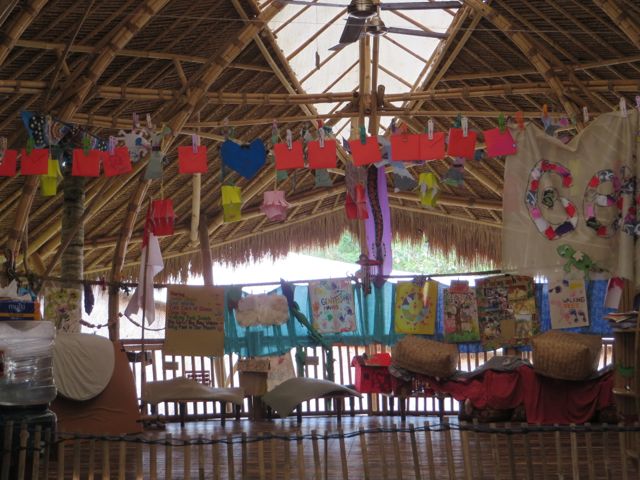
Art room
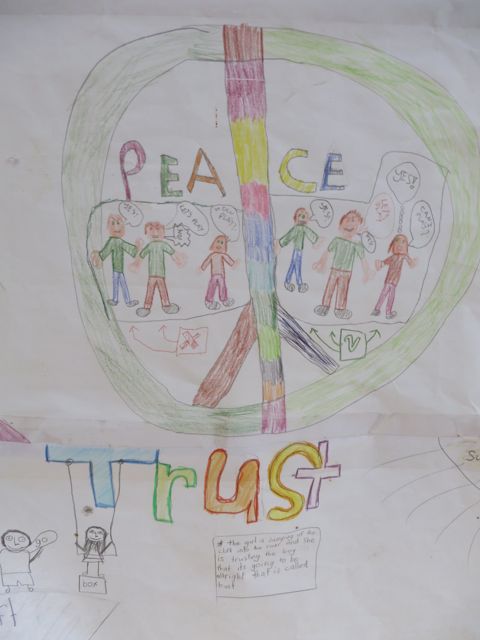
Beautiful lessons illustrated.
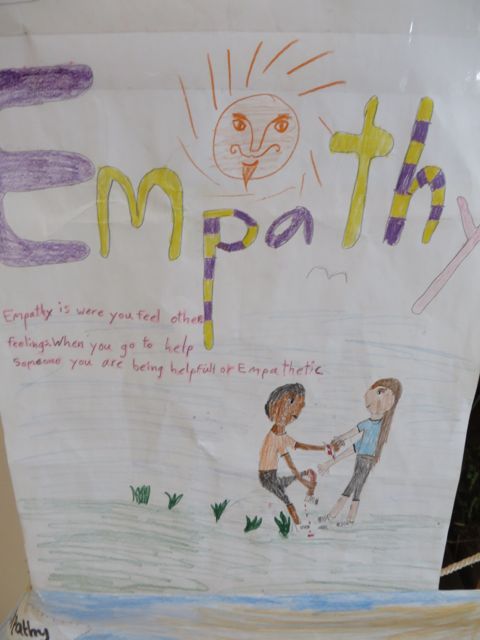
Love this.
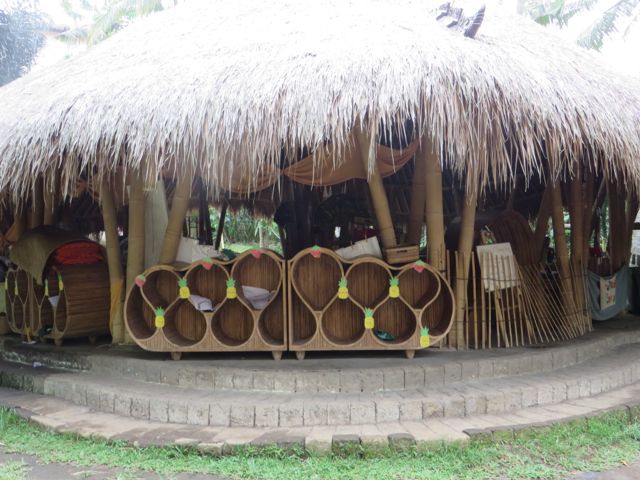
Cubbies
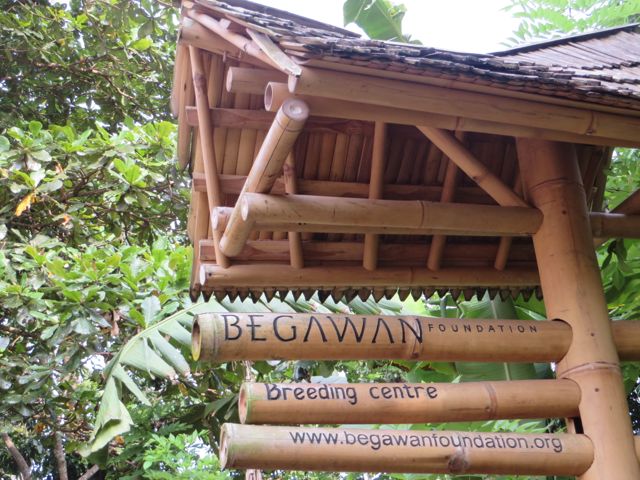
Birds on campus

A resident
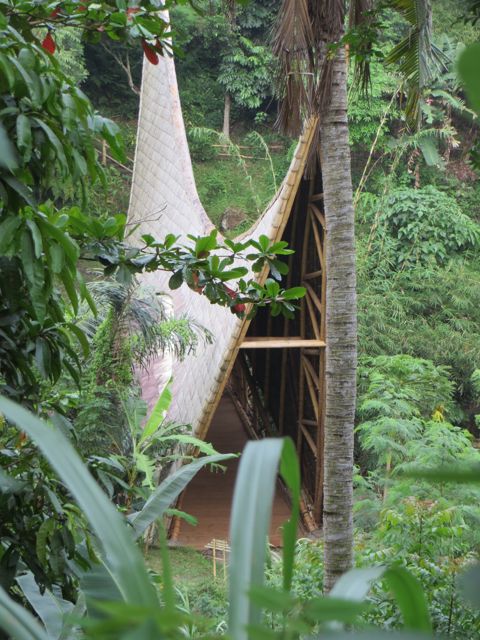
Footbridge
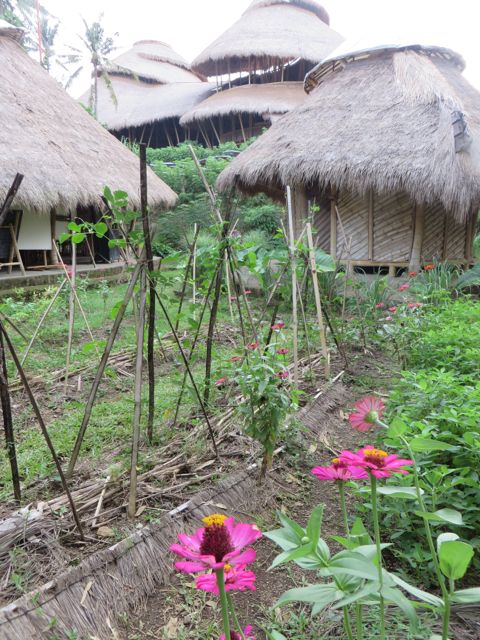
Garden, growing lunch…
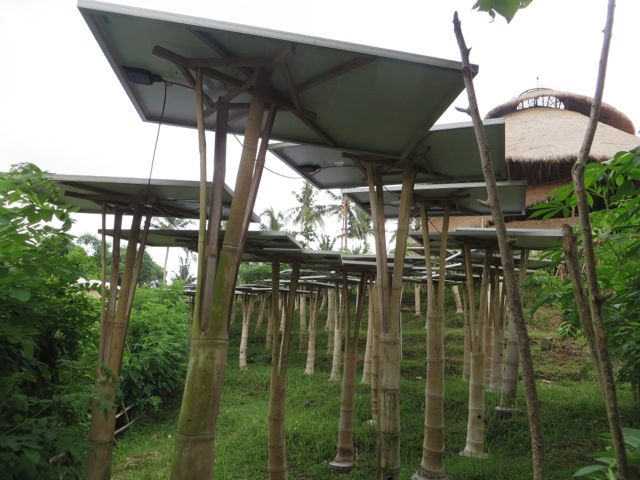
Solar garden
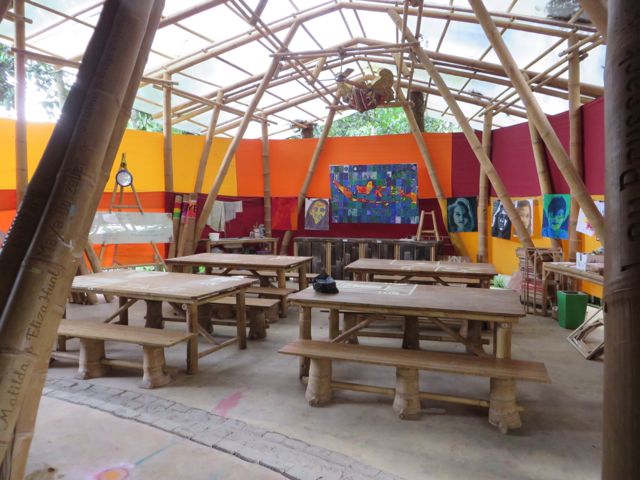
Another classroom
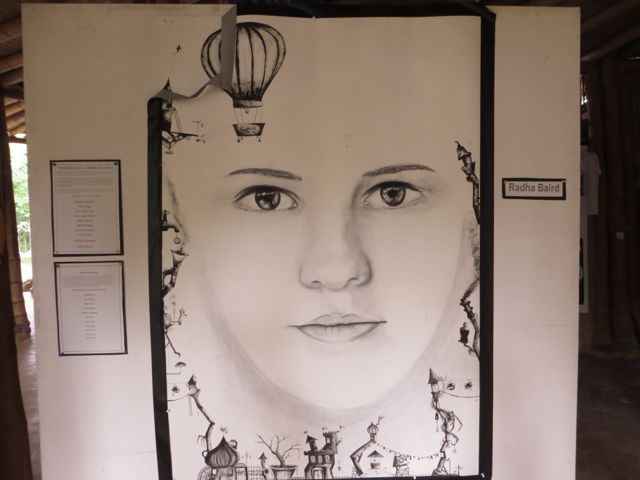
Gorgeous drawing by a student.

The central meeting structure with the offices upstairs
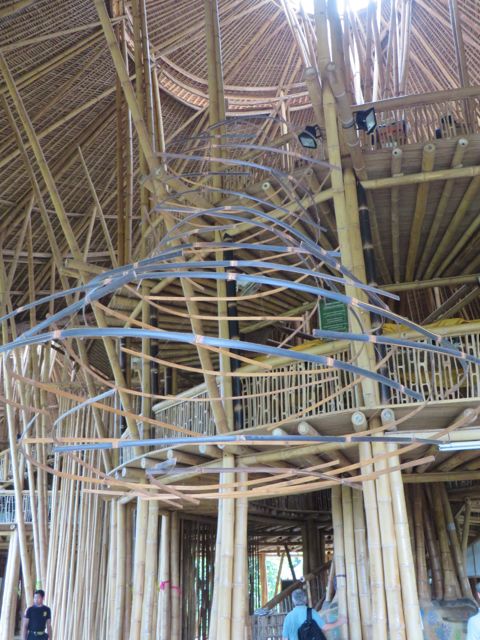
Art within art…
Following Green School, John, Cynthia and daughter Elora with her firm Ibuku began developing and building an entirely green community, called Green Village. Set on the Ayung River just a short drive from Green School, Green Village has risen out of the tropical landscape as an off-the-charts luxury collection of homes. It is a living, breathing brought-to-life dream, part Dr. Seuss, part Alice-in-Wonderland, and part Jetsons. And I say this only with the sincere and deepest appreciation for the fantastical imagery that their creators conjured up. The architecture follows the Bali vernacular of open-air living, while taking it to new heights, literally. The latest home is 9 levels and 8,000 SF. From the outside, it looks like oblong disks precariously stacked on top of each other by a toddler. The house is called Sharma Springs, aptly named after its Indian owners and the fresh water springs it sits on. The entrance to this house is a circular bamboo and plexiglass tunnel supporting a footbridge that leads to a circular door, hinged top and bottom that pivots open on its axis inviting and coaxing visitors inside. And then the jaw-dropping really begins. The bamboo takes on a life of its own, from supporting structures, to whirling ceilings, to winding staircases, to all sorts of furniture, romantic and playful beds, secret shelving walls that pivot to expose another room, and beyond. The balusters are slices of bamboo cut lengthwise that reveal the hollow interior shaft, called internodes, and the solid nodes. These slices alone are works of art. The bamboo flooring shows at least 6 different ways to “slice” it, whether it be on its thin side, flat side, woven and patterned, natural black bamboo or the lighter pale color, or a combination of both. While I was walking through, Rudiger Schodel was installing wire strings on a set of structural bamboo poles and creating a musical instrument. He has created this “instrument” which is so fascinating, whimsical and playful, and he hopes to inspire people with little or no musical training to give it a whirl. The sound that emanates from it is truly beautiful, and he tunes the strings with exact precision. He played for me, and then encouraged me to try while he played a wood flute and we made….well, music! For more on Rudiger, www.klangkunstwerk.ch. This house is truly a conglomeration of many artists, engineers, and creative geniuses, and has been most inspirational to me as I continue to explore my own boundary-less future.
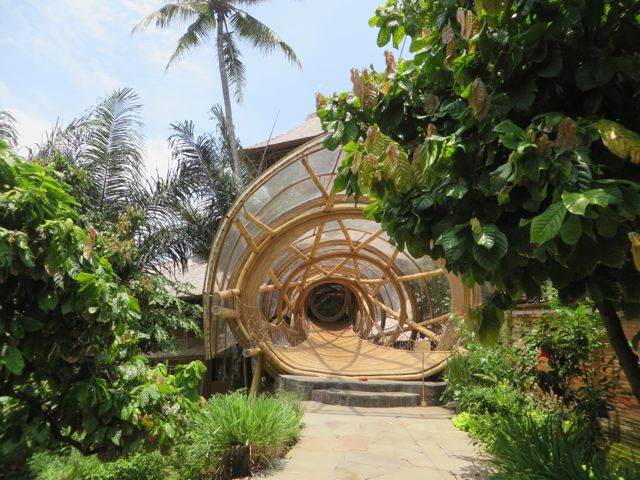
Just behind a typical Balinese walled entrance, this appears…
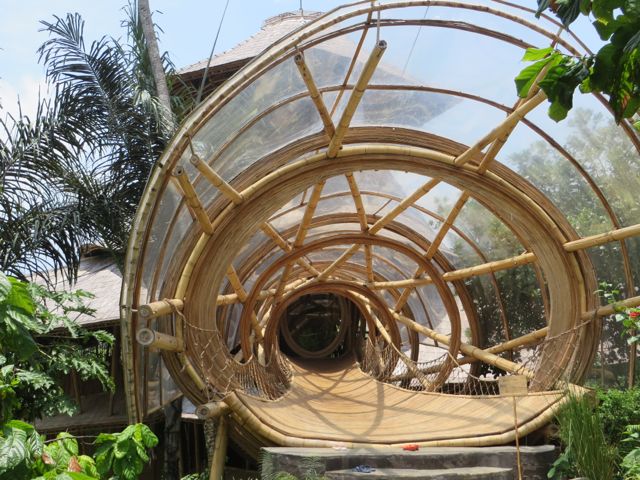
Conical entrance to the most recently built home in Green Village, Sharma Springs
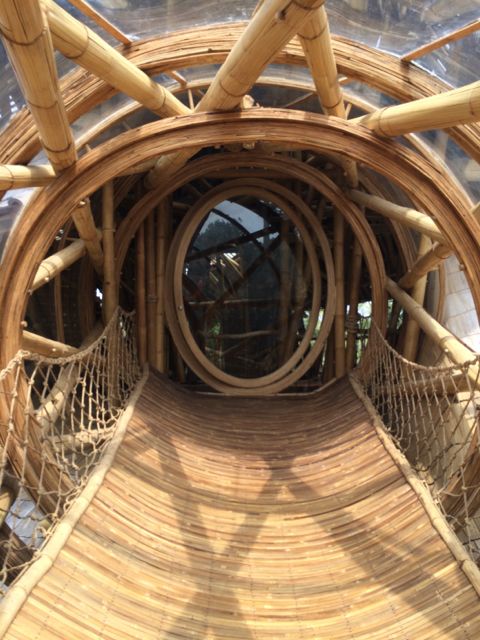
The front door, which is on the 4th level of the house
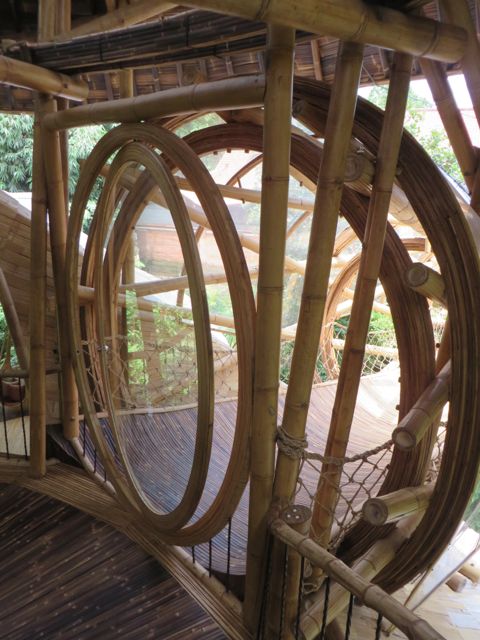
From the inside…
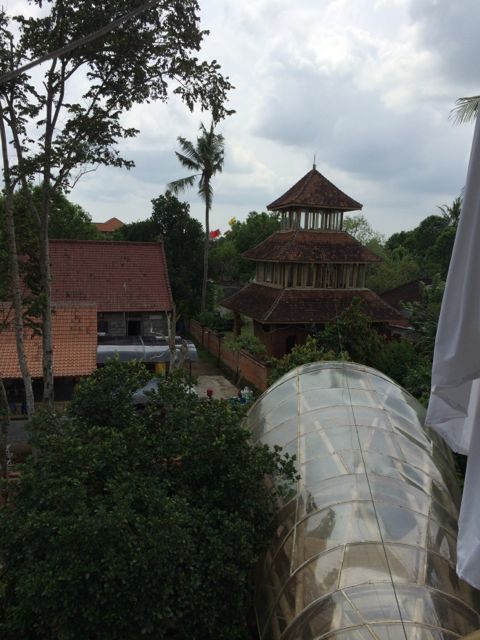
Looking down over that modern conical entrance back to the Balinese gate and house in front.
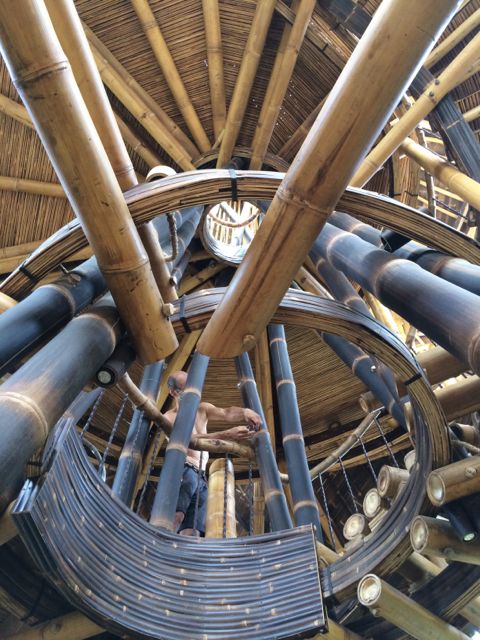
Looking up, Rudiger, a sound architect, artist and musician, is assembling his “strings on bamboo” creation – truly fascinating.
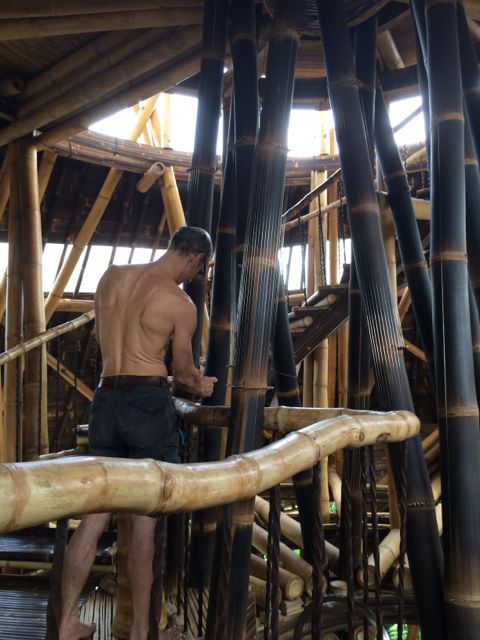
He plays it with his fingers like a harp or guitar , or with a bow like a violin.
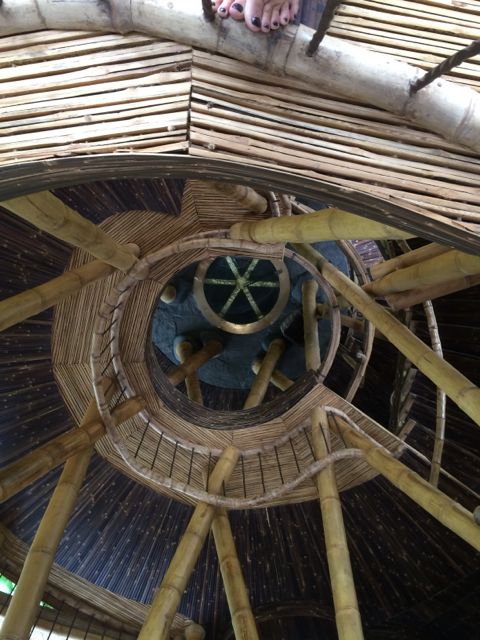
Looking down through the levels.
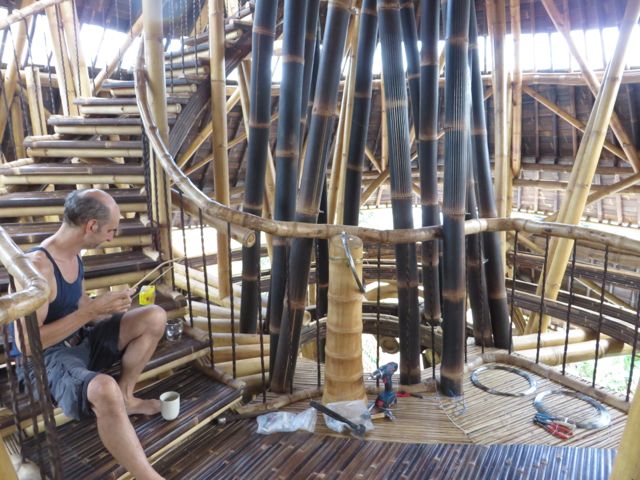
Creating a masterpiece.
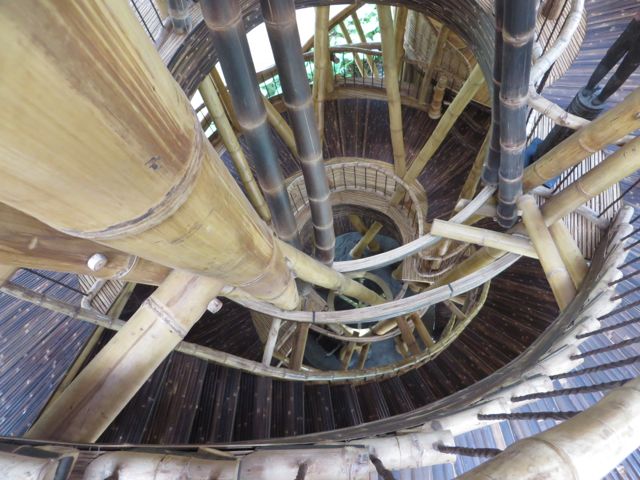
Fantastical bamboo architecture.
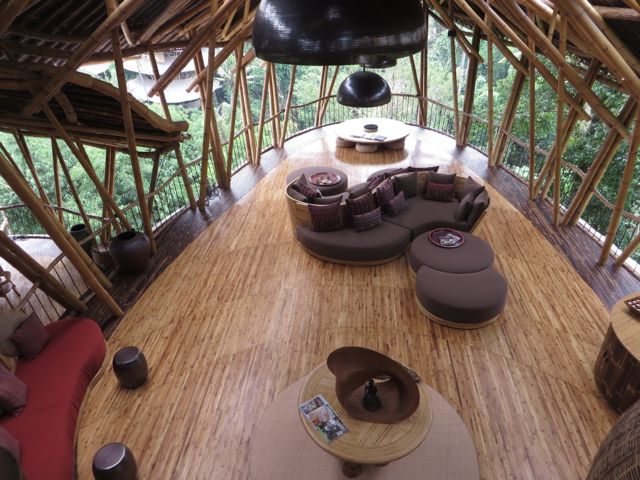
Living area.

Looking toward kitchen and dining area
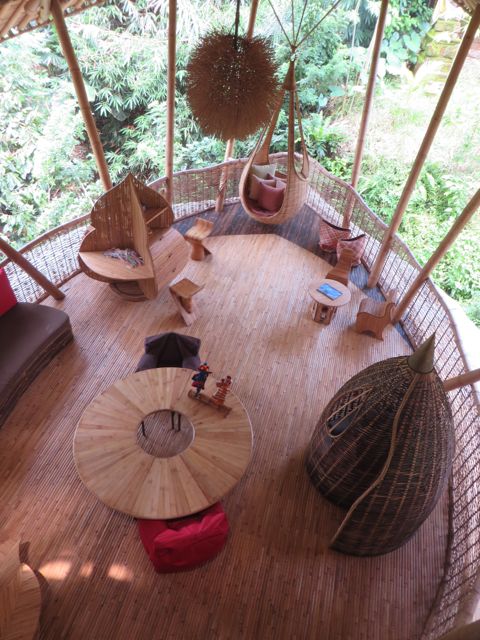
Kids’ playroom
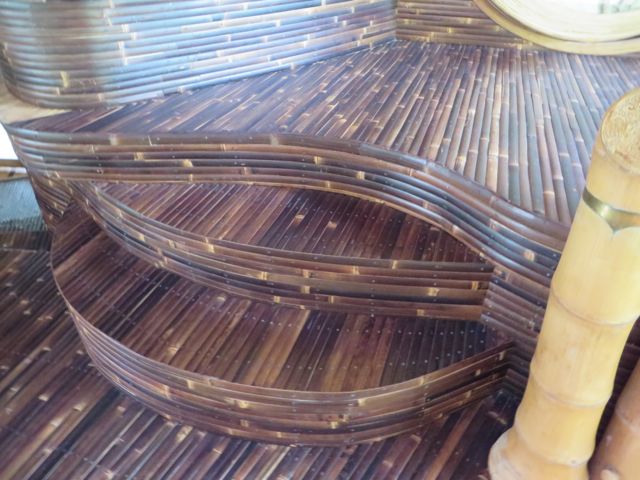
Detail of steps
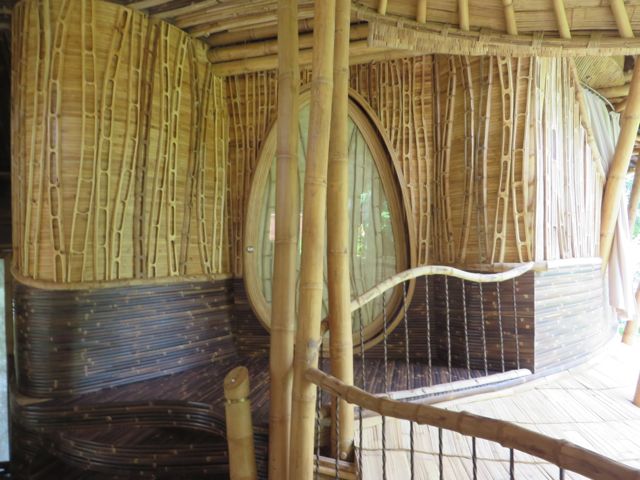
Beautiful wall detail and door shape
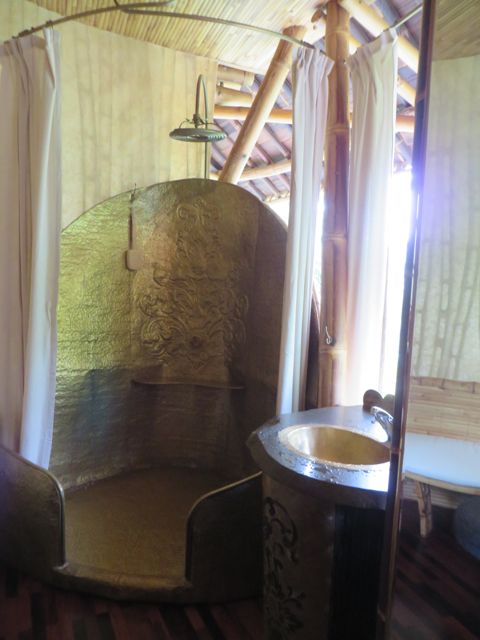
One of many bathrooms
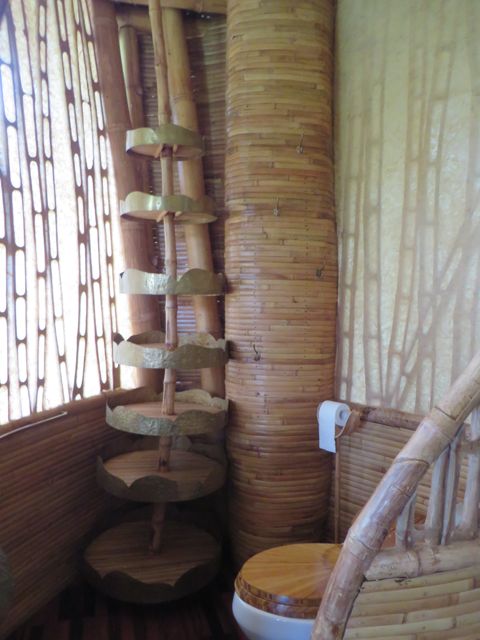

Just love the doors…
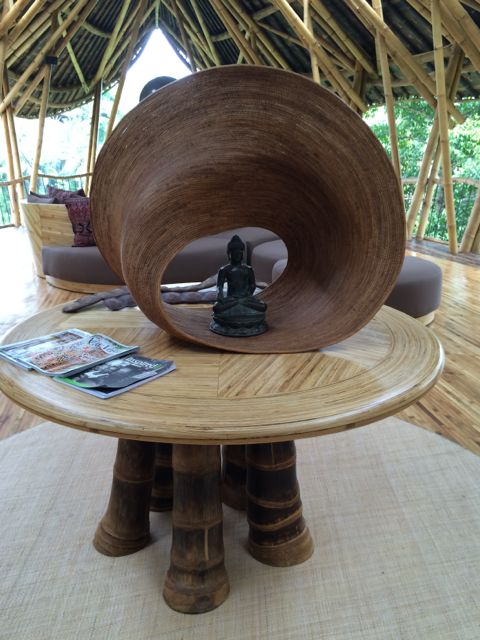
All furniture is designed by Ibuku
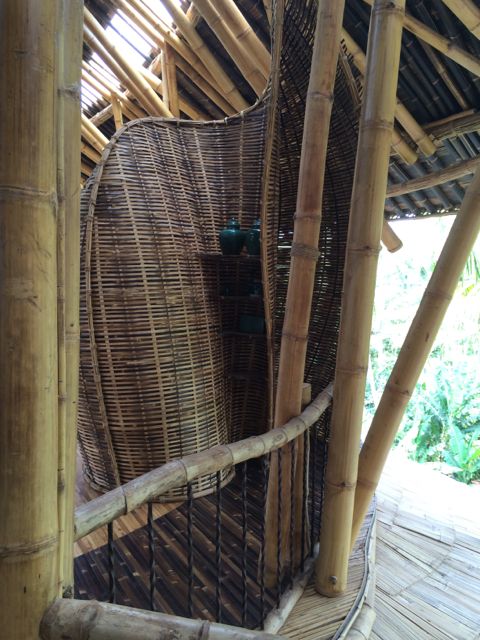
Bathrooms are pod-like stations that curl you in.
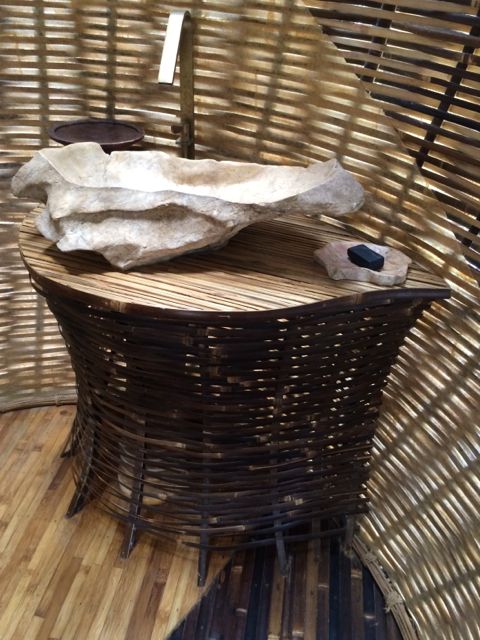
And they are all different
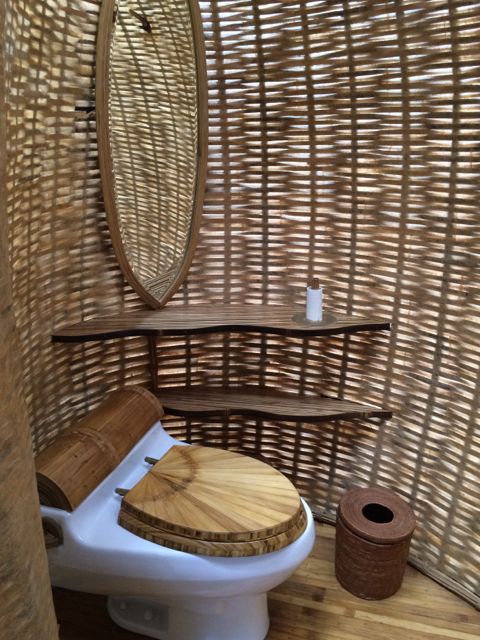
All bamboo but the actual bowl!
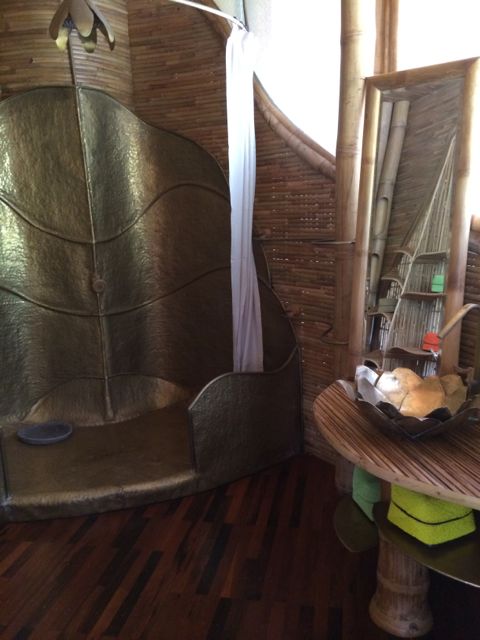
Brass leaf design in shower
Watch the shelf/wall..
It spins revealing a secret passage to the bathroom beyond..
Child’s room
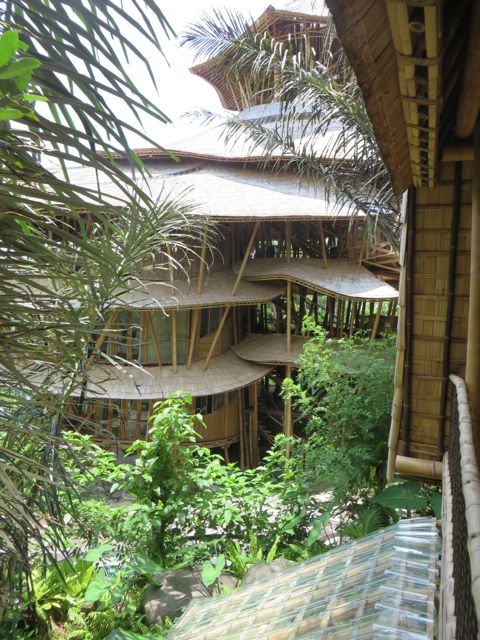
From my balcony at the guest house, next door
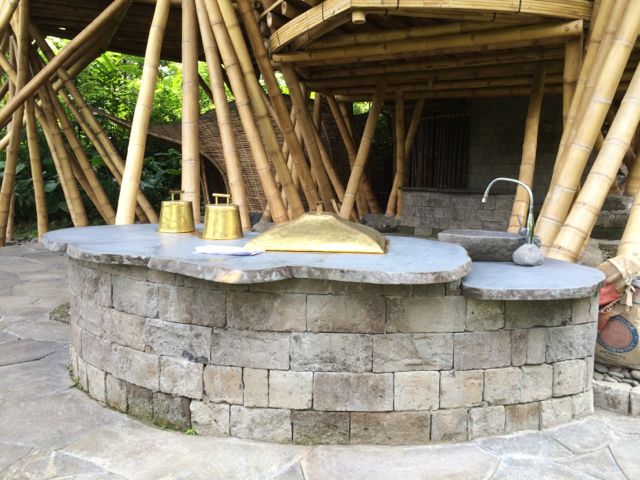
The bottom floor patio, outdoor kitchen and spa.
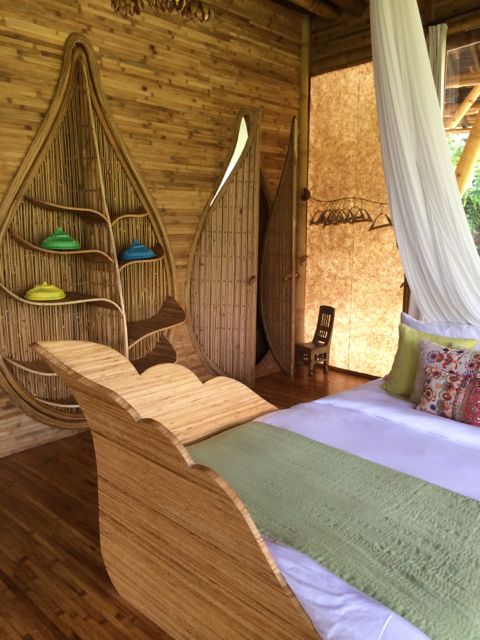
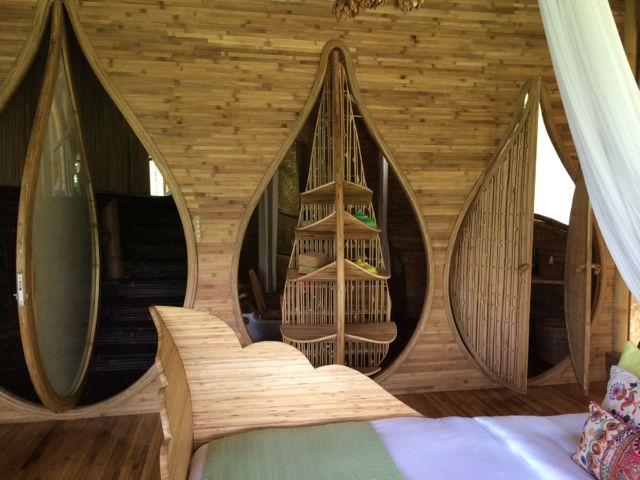
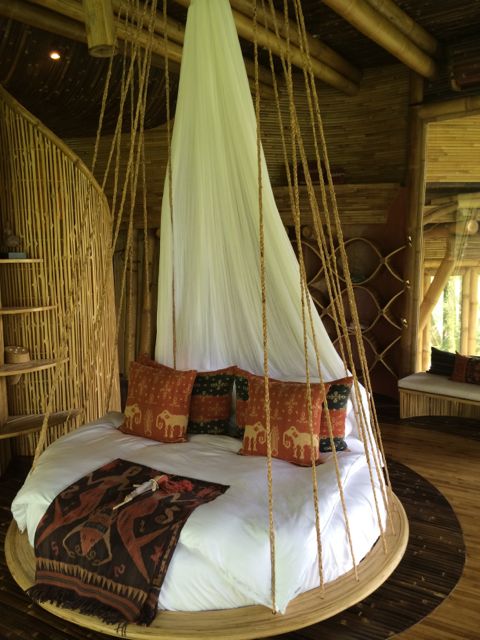
As I followed the maze of this house, the obvious question became apparent. What does it feel like to live here? Lucky for me, I spent the night in the guest house of Sharma Springs to experience all that I could. The guest house is a small one-bedroom but it still delighted my senses and fed my curiosity. The house does have modern conveniences, such as a mini fridge and a/c, although the a/c wasn’t working well – the ceiling heights are so high that I think the colder air just gets lost up there somehow. There are no ceiling fans and it was a hot night, so I didn’t sleep well. Still, I enjoyed my home-grown Balinese dinner out on the porch, I showered under the huge rain-can and watched the water go through the open floor boards and hit the ground below, and luxuriated in my gorgeous bed’s fine linens while the lullaby of the jungle serenaded me. I felt whimsical, adventurous, luxurious, and satisfied that I had partaken somewhat in sustainability.

Sharma Springs Guest House
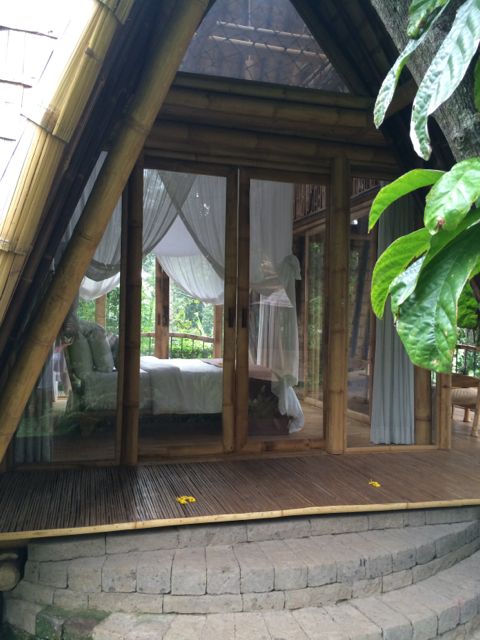
Entrance to the guest house.
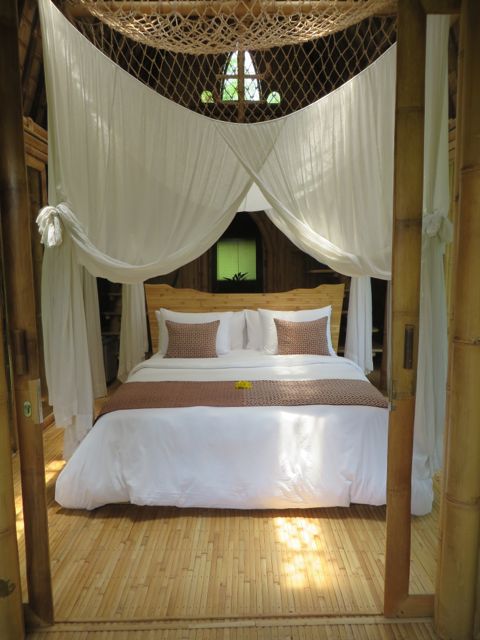
Guest house bed.
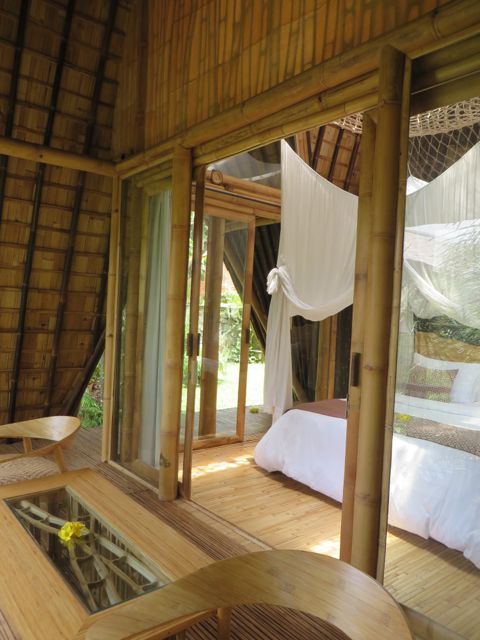
From the balcony looking in.
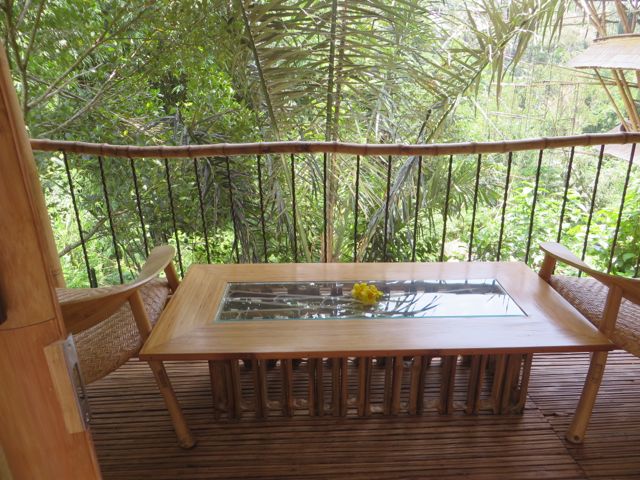
Looking straight out from the balcony
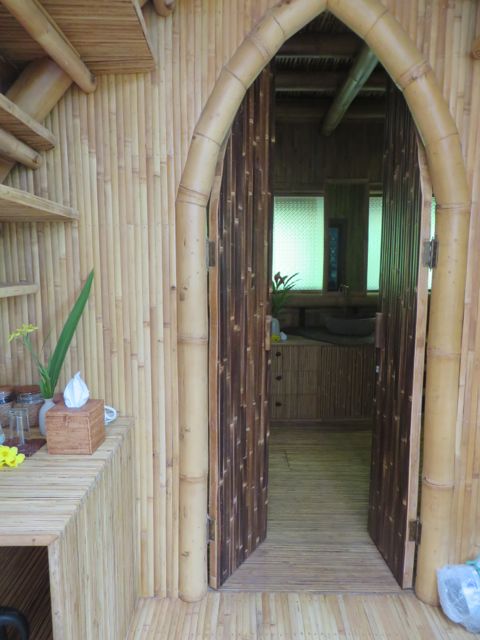
Behind the bed is the bathroom and symmetrical steps leading up to the loft.
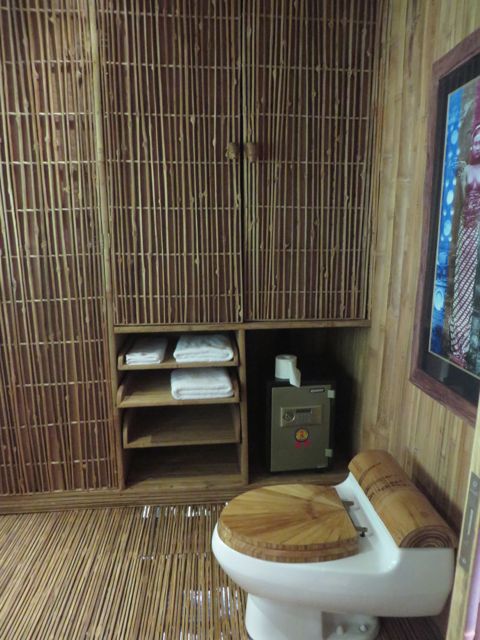
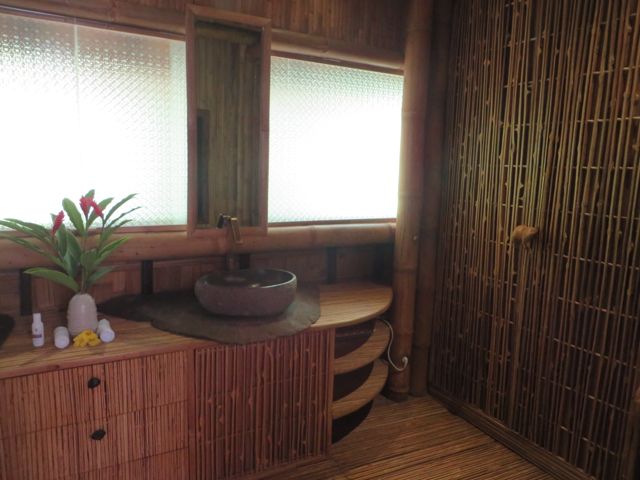
Bathroom with stone sinks
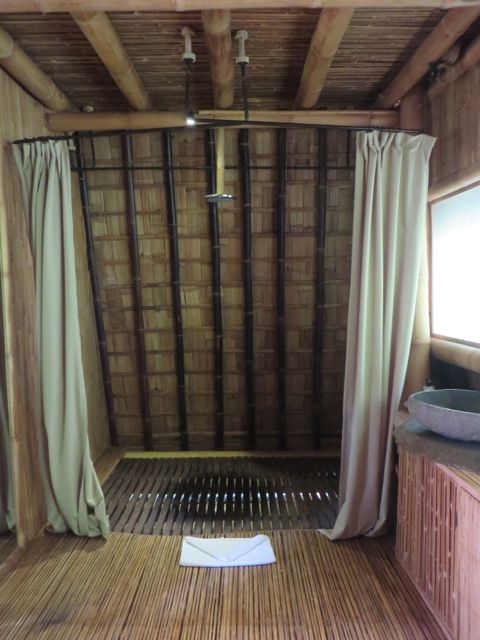
Shower detail

Steps leading up to loft
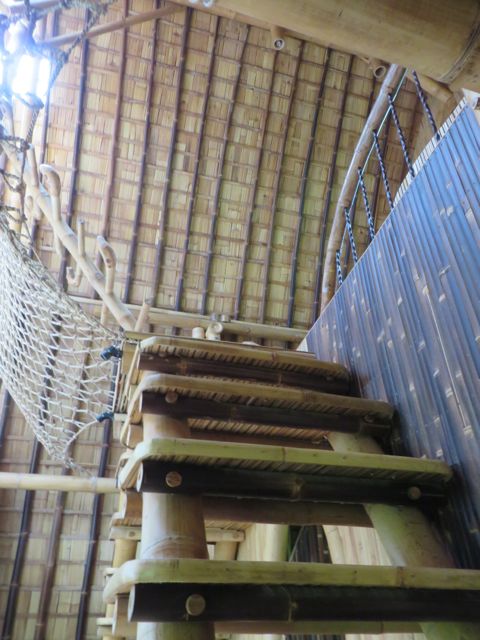
Climbing the steps..
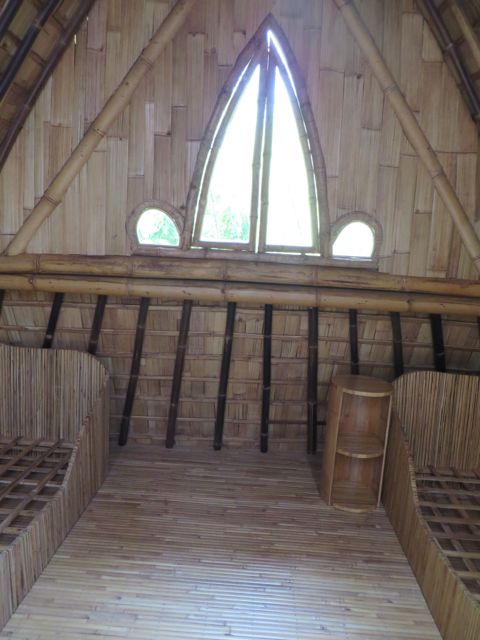
The loft – cushions were being made for the daybeds…
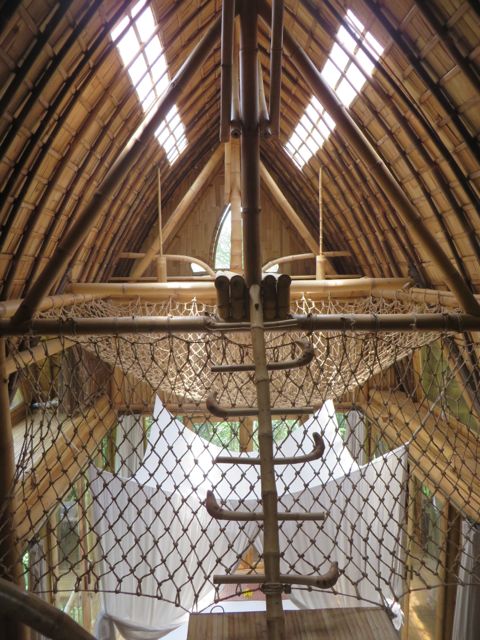
View from the loft looking down above the bed..
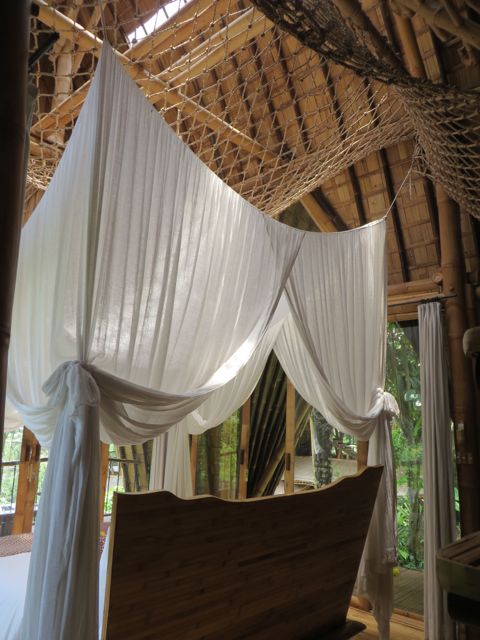
View from behind the bed.
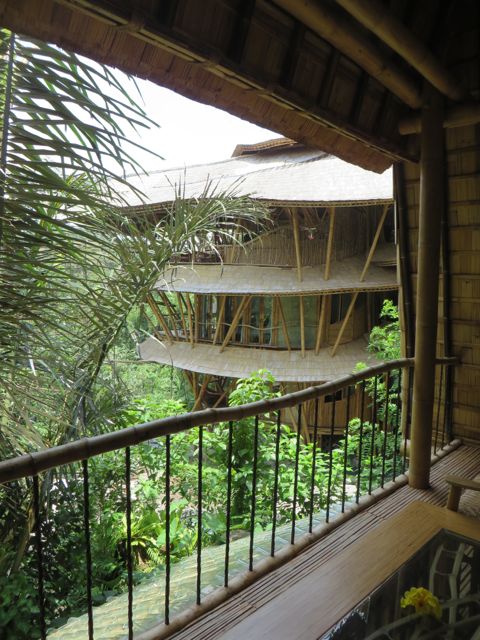
And looking out at Sharma Springs from the guest house.
Here are some other pictures from another house I toured at Green Village and from PT Bamboo Pure, the largest bamboo factory in Indonesia. If you want to really see better pictures and get more information on all of this, I strongly suggest you visit www.GreenVillageBali.com and also Elora Hardy’s company website, www.Ibuku.com. It is all fascinating and worth a trip just to Bali to explore it!
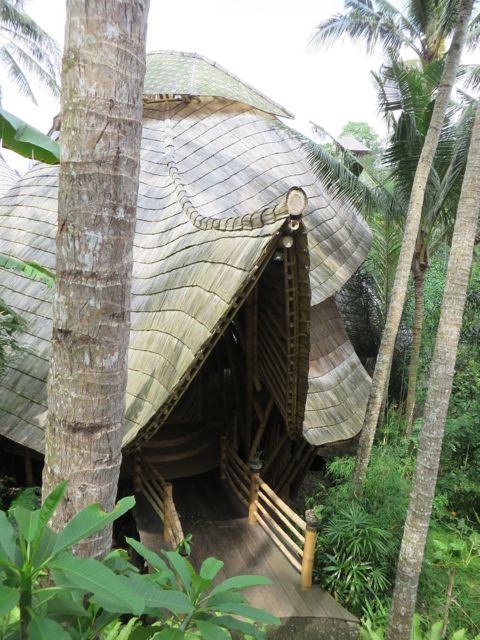
House in Green Village

Green Village

Another front door – better than any revolving door I’ve ever experienced…
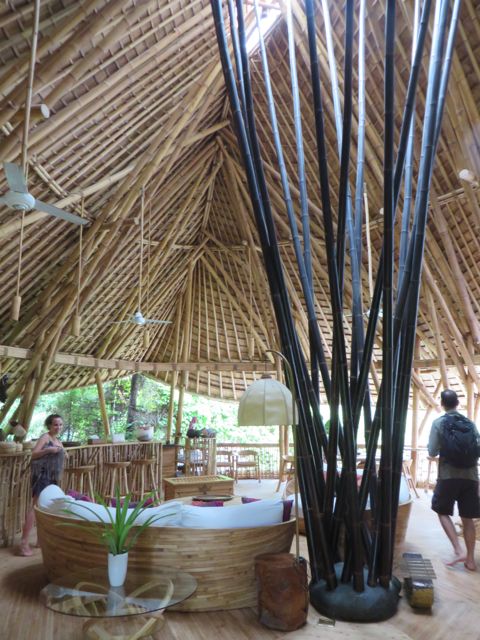
Inside the home

Wish my camera could see what my eyes see!
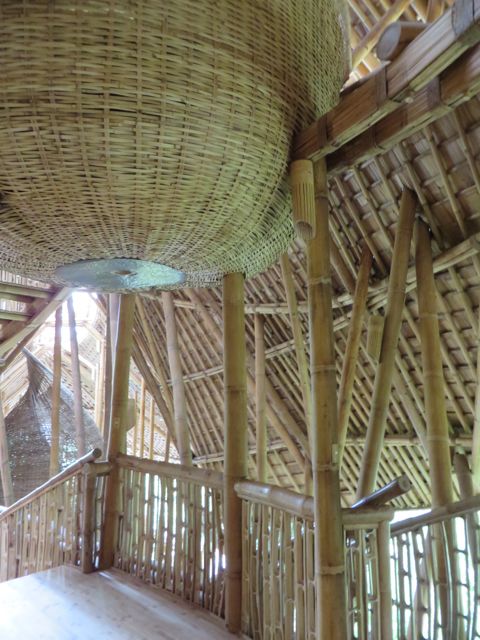
a pod dangles from an upper level
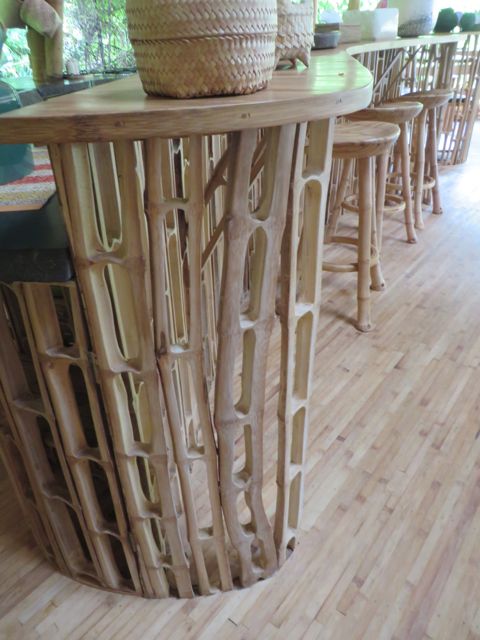
Bar detail

Kitchen
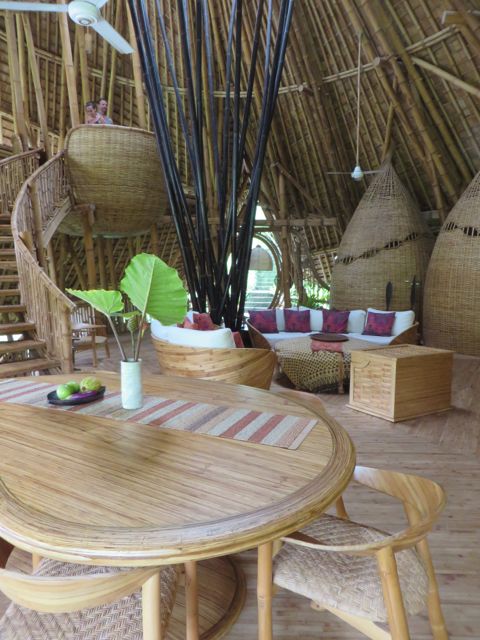
Dining area and living area with bathroom pod on left and kitchen pantry pod on right.
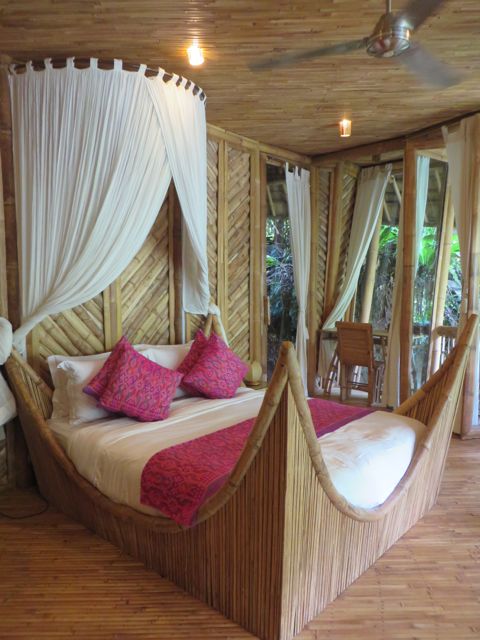
A bedroom
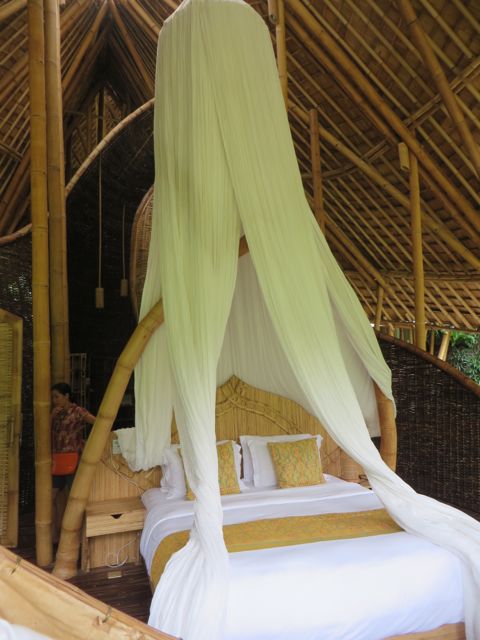
And another…
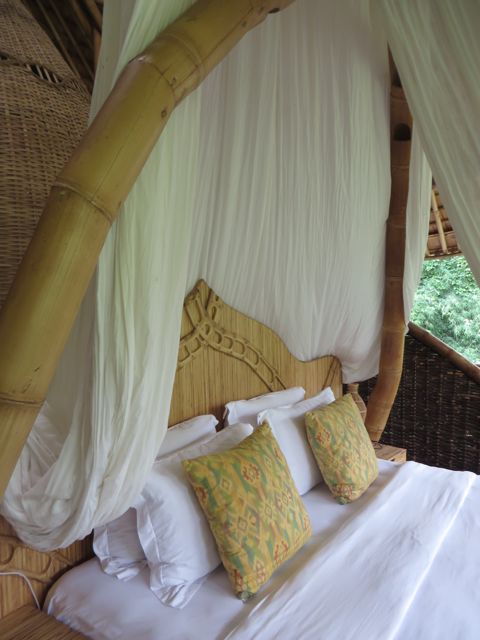
This bed has built-in air conditioning – the vents are in the bent bamboo above the headboard.
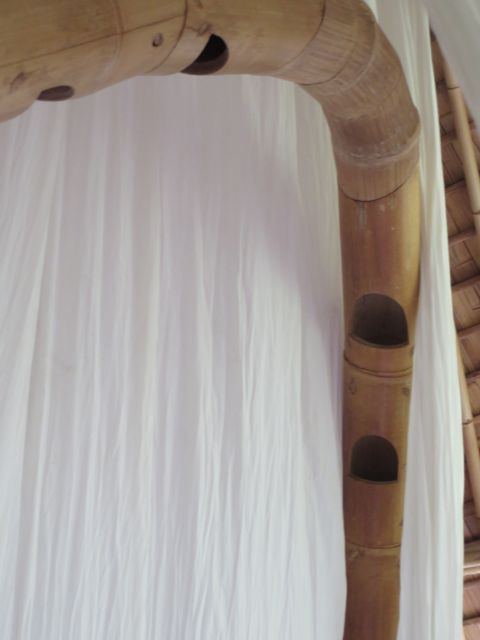
Detail of a/c vents
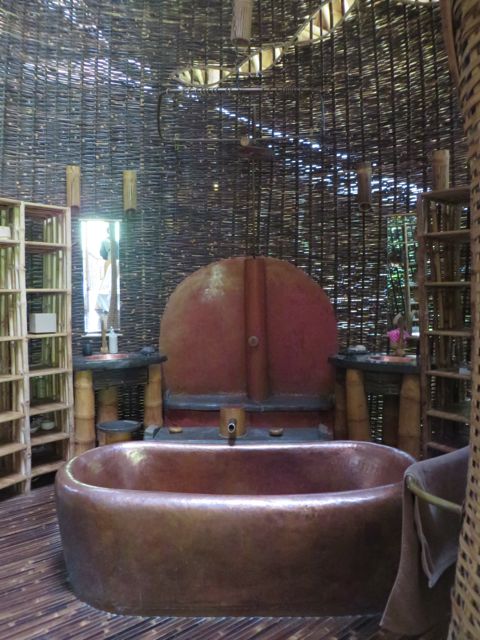
Another gorgeous bath
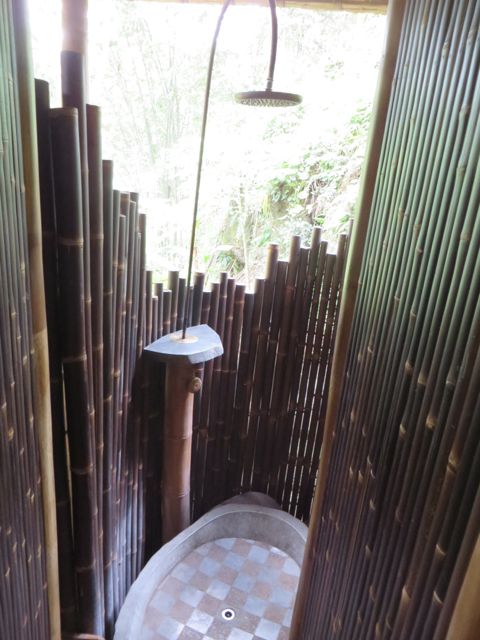
And outdoor shower
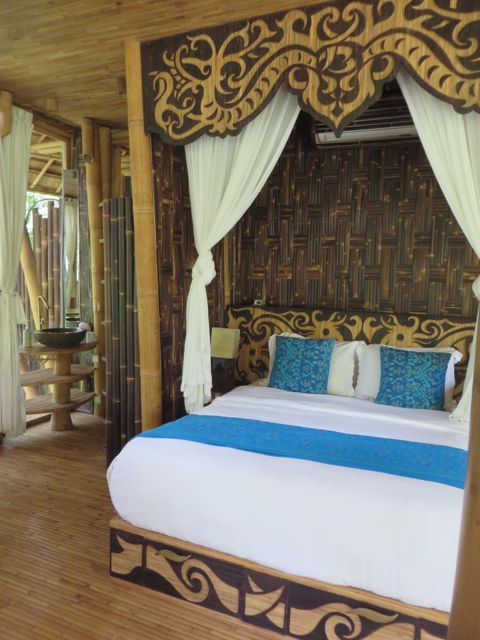
This bed has a gorgeous carved cornice which looked like fabric to me until I got up close.
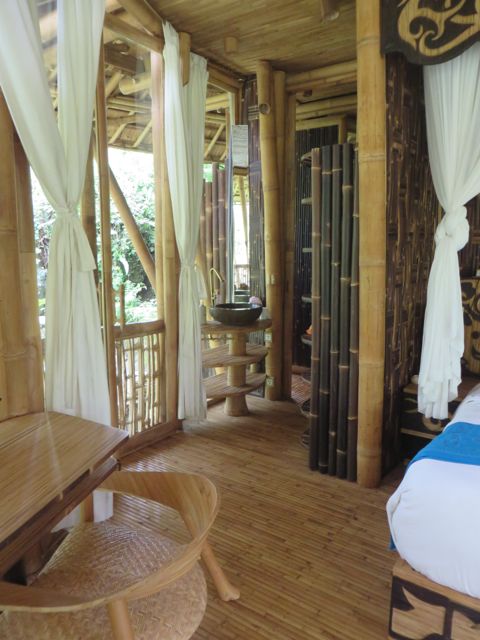
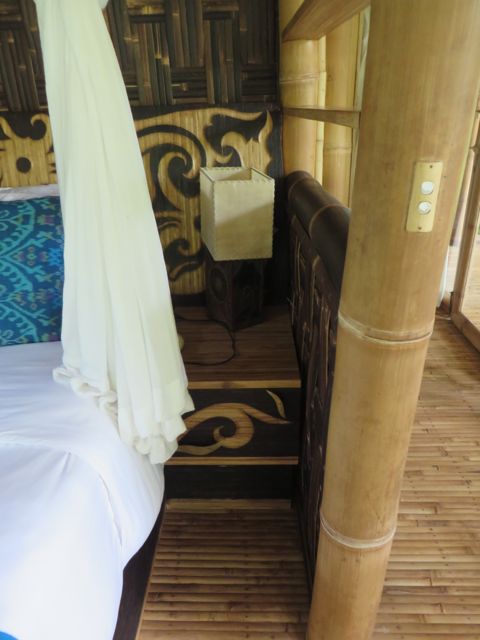
Detail of bed and night tables.
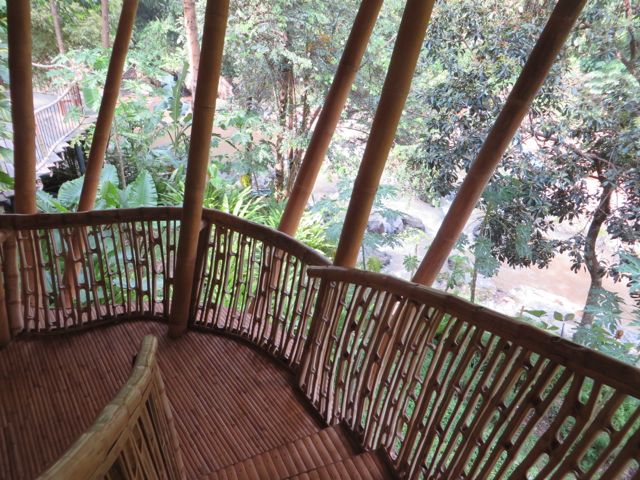
Beautiful stair detail and view.
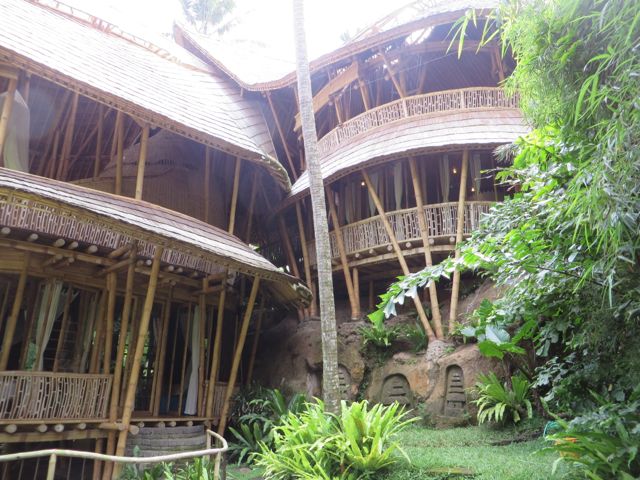
From outside
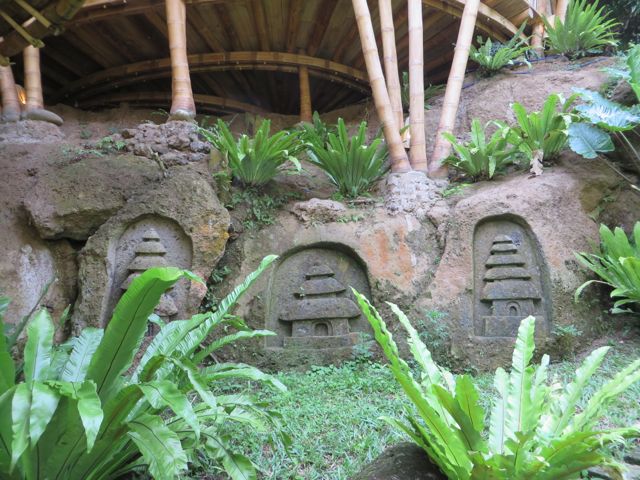
Detail carved into rock.
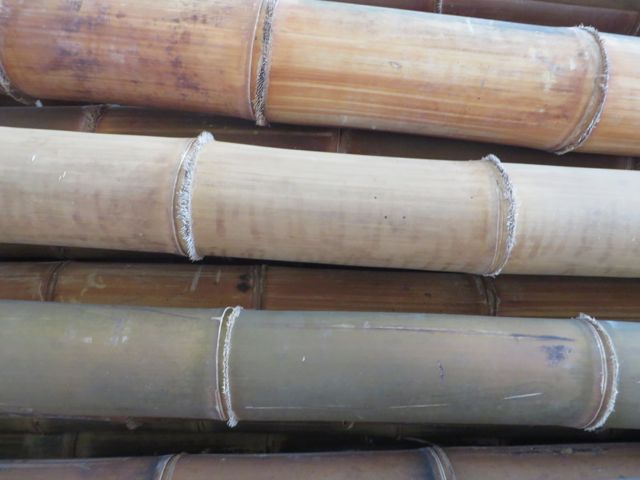
Bamboo at PT Bamboo Pure
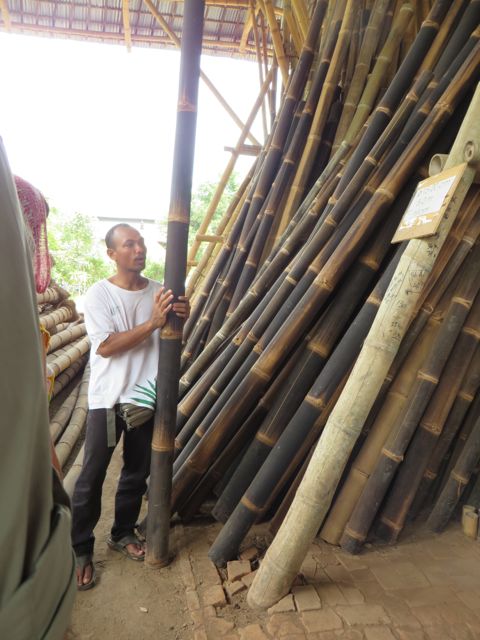
Black bamboo at PT Bamboo Pure
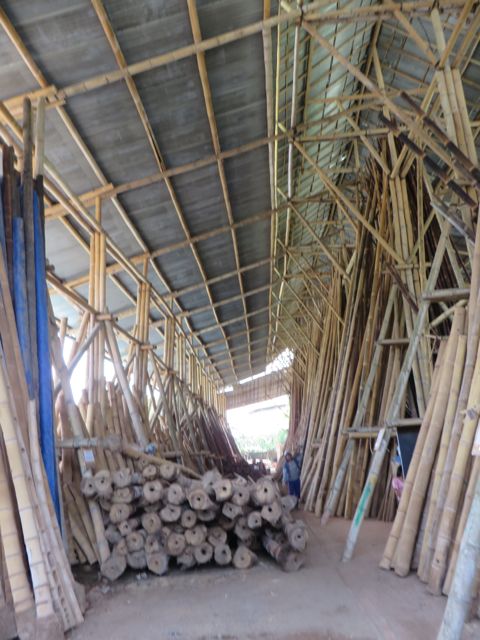
PT Bamboo Pure
My next destination was to John & Cynthia Hardy’s boutique hotel, Bambu Indah. The property is home to the Hardy’s and was originally developed for their family and friends to stay when they were visiting with them in Bali. John & Cynthia purchased 11 antique Javanese wedding houses in Java and had them carefully dismantled and shipped to Bali where they were lovingly re-assembled at what is now called Bambu Indah. Each house is named and has a story. I stayed in Biru house, which means “blue” and enjoyed a rustic, natural setting, astonished that these truly old homes – over 100 years – have stood the test of time and continue to give joy to those lucky enough to be sheltered by them. The floorboards in my bathroom were thin and spread far apart from wear, and I watched the water from my shower drain down to the ground beneath the house, nourishing the soil. The lighting in these houses is done beautifully, highlighting the worn wood and detail. The floors creak loudly and are gorgeous – I wish I knew what type of wood they were. And yes…the a/c above my head worked beautifully!
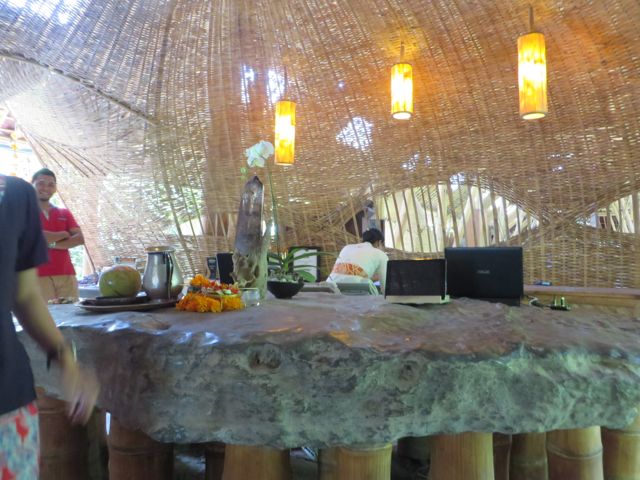
Reception at Bambu Indah.
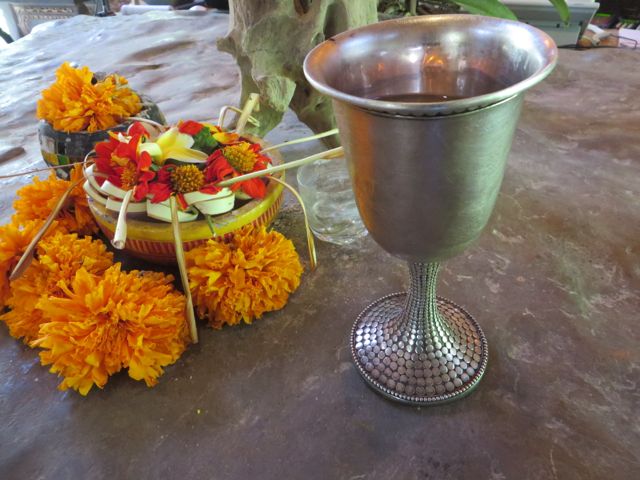
John Hardy goblet, filled with a cold drink for me.
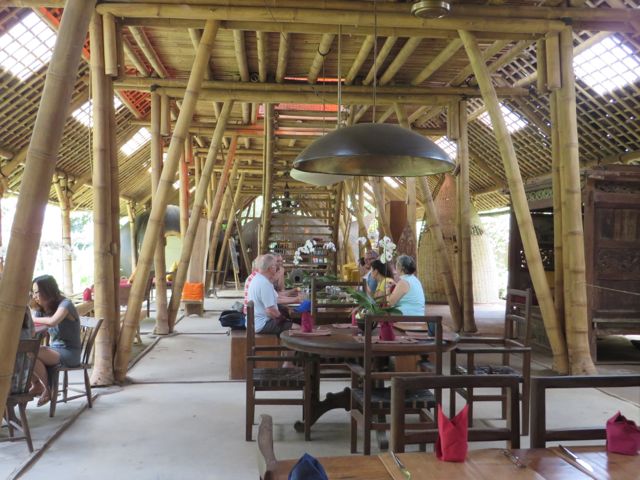
The dining area
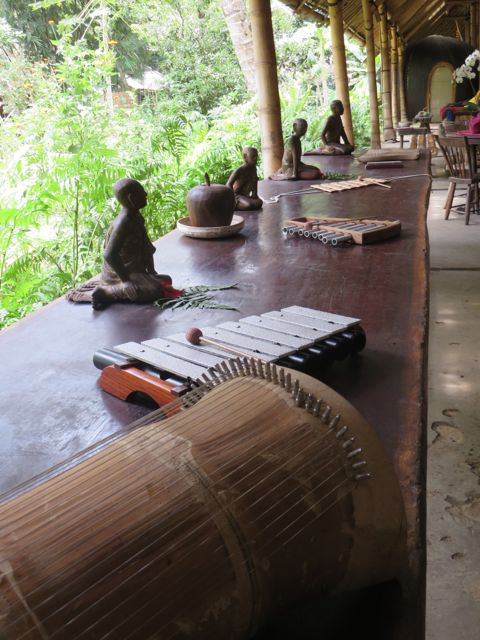
Beautiful musical instruments on a gorgeous wood table in the dining area.
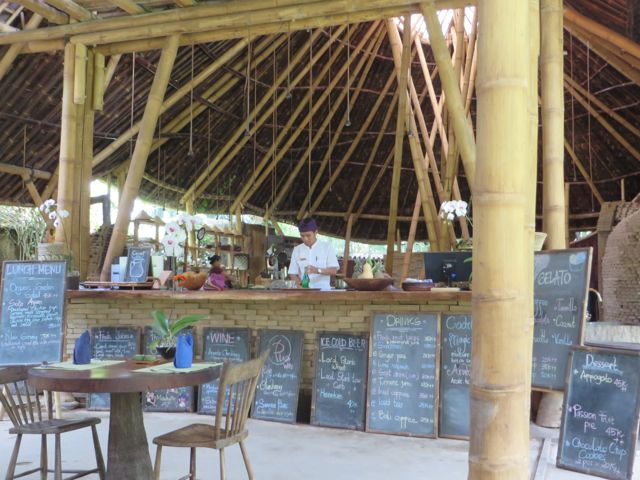
The menus and kitchen.
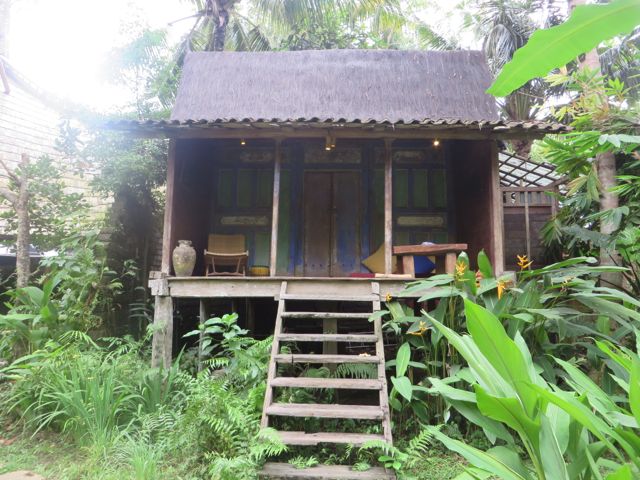
Biru House.
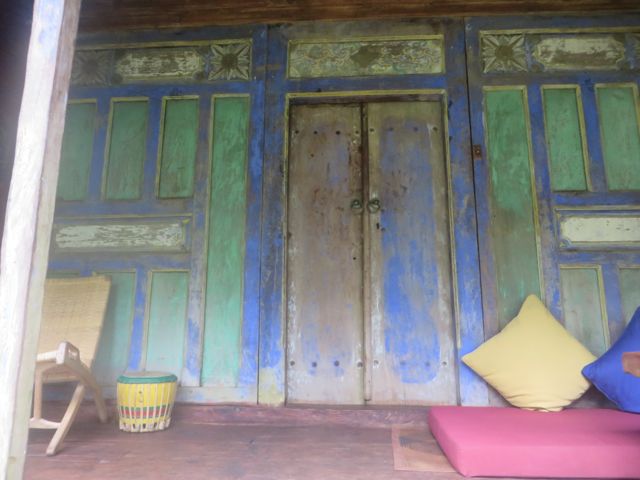
Detail of Biru House’s front door
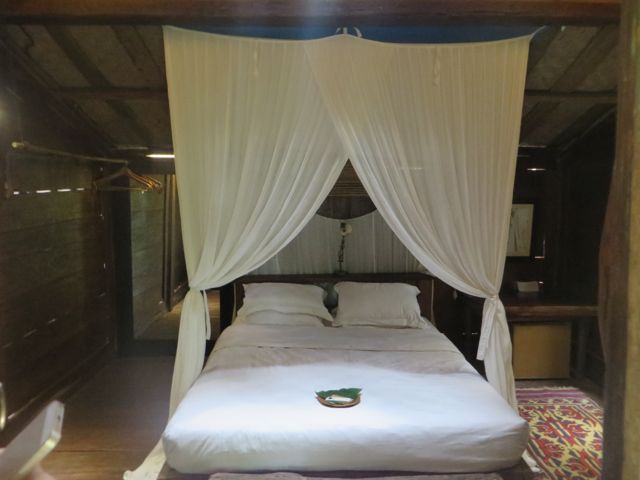
Inside Biru House

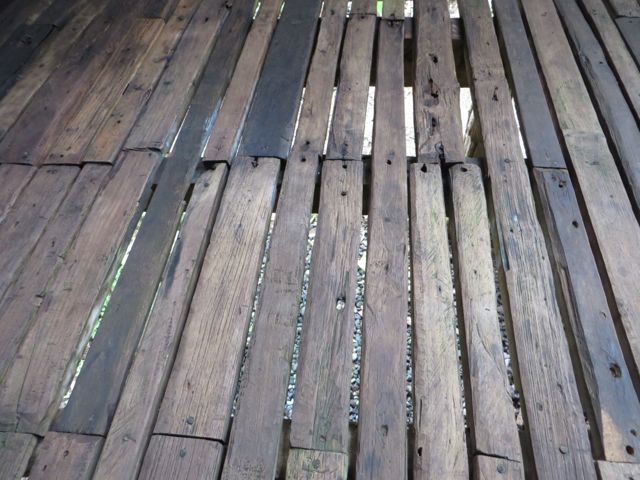
Bathroom floorboards.
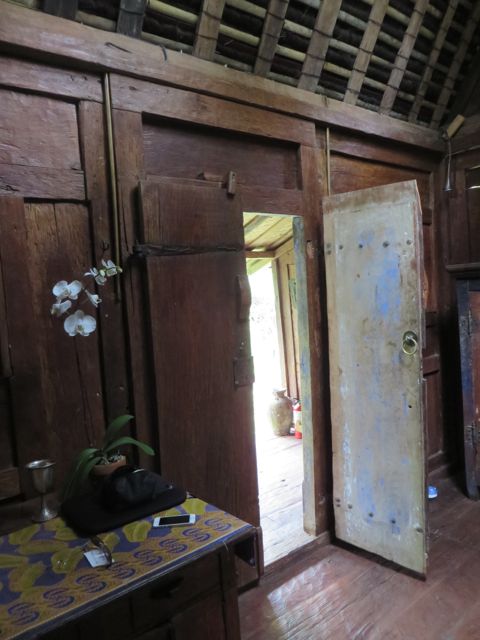
Detail of wall and ceiling inside Biru House.
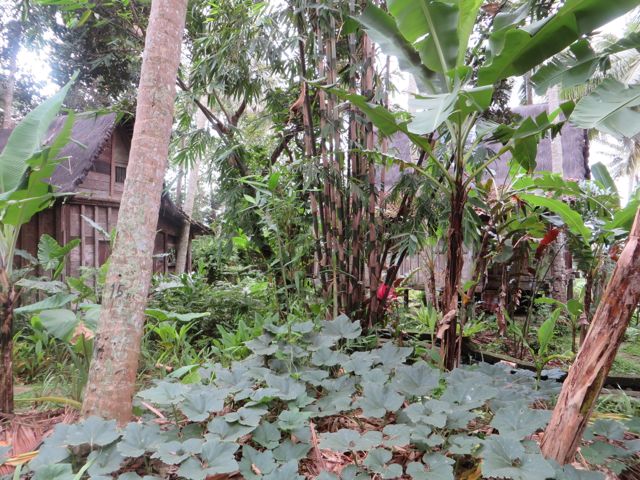
Some other houses on the property.
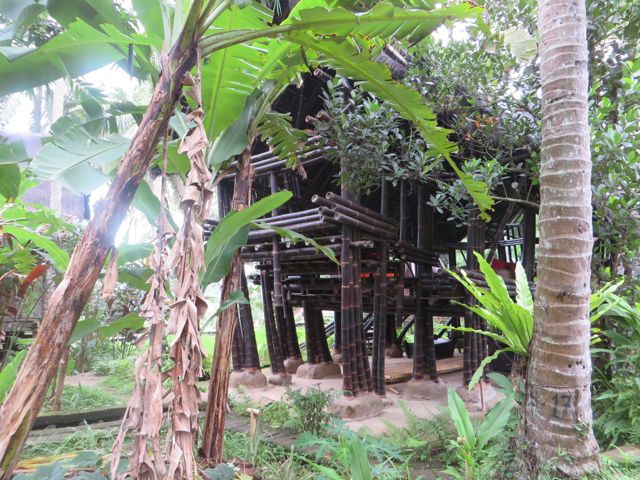
Black Bamboo Minang House, used for yoga, and celebrations or private events.
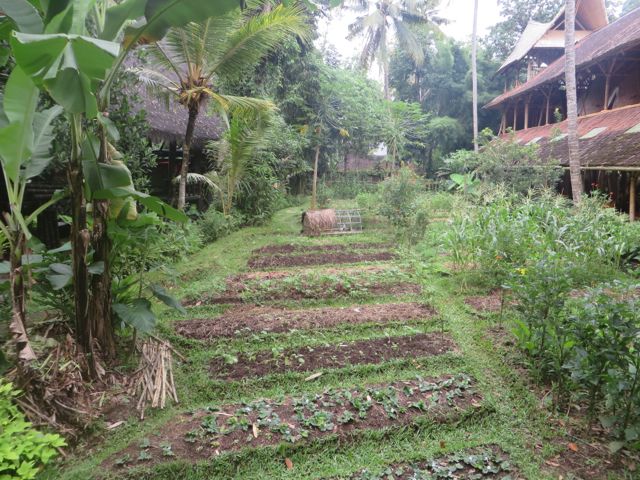
Food garden…enak!
During my stay here at Bambu Indah, I toured John Hardy’s Jewelry Factory, a 20-minute car ride away. Originally from Canada, John settled in Bali in 1979 and began making jewelry with local artisans. His craft and creative genius showed in the technique and final product he produced here in Bali and received worldwide appreciation and attention. He and Cynthia met here in the 80’s and their collaboration catapulted their brand into an internationally recognized icon of jewelry design. For me personally, John Hardy was a name I learned in my early 20’s when I fell in love with the silver shapes and finishes of his rings and his chains. They were very different, much like the architecture of Green Village, and I like different. He became my first – and only except for Saundra Messinger who I LOVE too now – jewelry designer that I started to collect. So I knew I needed to see the birthplace of these creations. John sold his business to his partners in 2007, which I only found out once I arrived here in Bali, but the funny thing about that is that I haven’t purchased anything from John Hardy in years, and now I know why. Without realizing the newer collections were not designed by John Hardy, I knew I wasn’t “feeling” these new pieces. I am nothing if not loyal and true to my feelings, and somewhat intuitive, ay? So I did visit this factory, and tried hard to find something for myself that I could bring home, but you can’t force these things. The sales girls understood my dilemma in that John Hardy doesn’t design anymore. I did find lovely gifts for my kids and as I paid for them, I noticed a gorgeous silver pen in a wood holder. It was magnificent. I laughed as I told the girls that THAT is what I really wanted for myself, and she laughed back and told me it is actually for sale, and it is the last one, AND John Hardy designed it – it was left over from years ago. L-U-C-K-Y M-E!! :))

The John Hardy Showroom
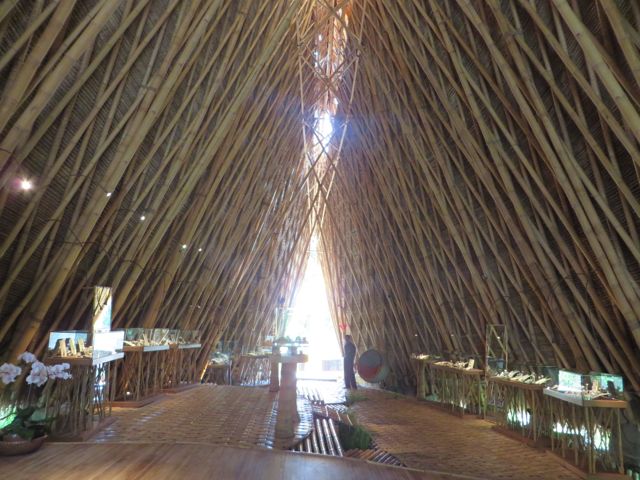
Inside the showroom.

The desk…where I spotted my pen!
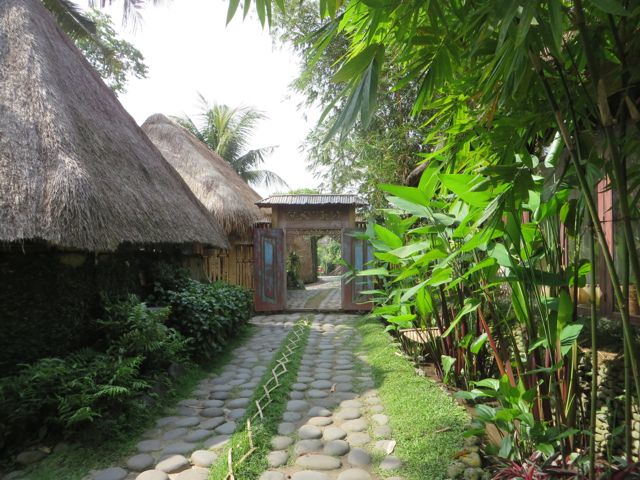
Just loved the way they protected the grass on this path…
As I contemplate what’s next for me in my life, I feel strongly it will have to be something to do with educating others, whether it be about sustainability in an art form or about education itself; helping to spread the opportunity for education, and guiding the next generation of boundary-pushing creative geniuses.

Inspired and Grateful!


 Toured Home
This place is extraordinary. I can feel and smell the air from your comments and photos. And you are beautiful, my special one…
Meryl, I have been reading every blog – You are amazing in so many ways. Taking this trip for one…Bravery and Courage in cape town….Australian adventure…Now Bali…I can’t wait until the next post. I love your writing. I feel as if I am right there with you and YES! YOUR CAMERA SEES WHAT YOUR EYE DO!! FYI Marti is in Cape Town for a semester – she has fallen in love with everything South African. Please keep the photos coming and the stories to match XOXO Debbie
Green Village looks gorgeous. I have to go to Bali and Java one day. I love their resist fabrics like batiks and ikats,( particularly from Java)
and now I’m in love with the design and the woodwork at this place. I enjoy your writing most when you focus on details of what you are seeing, the materials, the unique designs and the craftsmanship. You have an educated eye, so when you translate what you see into words, it’s personal and enlightening. Missing you Meryl!